Why Do Commercial Truck Accidents in Florida Lead to Bigger Settlements?
Truck crash claims tend to settle higher than car crash claims because nearly everything about them is larger: the injuries, the insurance, and the number of parties who can be blamed. A higher settlement is never guaranteed. What a case is worth depends on the specific injuries, the evidence, and the coverage available.
A commercial truck accident settlement often dwarfs what the same person would receive after a typical car crash, and the reasons have little to do with luck. Florida carries some of the heaviest freight traffic in the country, and when a fully loaded tractor-trailer strikes a passenger vehicle, the physics, the insurance, and the law all push toward larger claims.
Knowing why helps injured drivers avoid a costly mistake: treating a truck crash like a fender bender and accepting an early check. The value drivers are real, and they stack up fast.
What makes a truck crash payout different from a car crash payout?
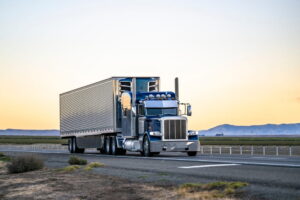
Three things stack up that a car crash rarely has all at once. Bigger injuries create bigger medical bills and more lost income. Bigger insurance policies mean more money is actually there to collect. And more potential defendants mean more sources to recover from.
Each of these alone can raise a claim's value. Together, they explain why serious truck cases sit in a different range than car cases.
Why are truck crash injuries usually more serious?
Because of weight and force. A loaded semi can weigh up to 80,000 pounds, while a typical car weighs around 4,000. That mismatch turns a survivable car-on-car collision into something far worse.
Crashes at that scale often cause spinal damage, traumatic brain injuries, and multiple fractures. Those injuries bring surgeries, long recoveries, and sometimes a permanent loss of earning ability, all of which raise what a claim is worth. For a closer look at how crash mechanics drive value, our breakdown of underride crashes and case value covers one of the most severe scenarios.
How much insurance do commercial trucks carry in Florida?
Far more than cars do. Federal law sets a floor of $750,000 in liability coverage for most interstate trucks hauling general freight, and many carry $1 million or more once excess policies are added. Florida drivers, by contrast, are not required to carry any bodily injury coverage at all.
That gap is the single clearest reason truck settlements run higher. The rule comes from the FMCSA, the Federal Motor Carrier Safety Administration, and the floor has not been raised since 1980.
| Typical Florida car driver | Interstate commercial truck | |
| Required injury coverage | None (only $10,000 PIP and 10,000property) | 750,000 federal minimum |
| Higher-risk or hazmat loads | Not applicable | Up to $5,000,000 (per 49 CFR § 387.9) |
| Extra coverage layers | Rare | Common, often $1 million or more |
PIP, or Personal Injury Protection, is the no-fault coverage Florida drivers must carry. This personal injury protection insurance rarely stretches far after a serious crash, which is why the trucking side's larger policies matter so much.
Who can be held responsible for a truck crash?
Often more than just the driver. The trucking company, the owner of the truck or trailer, the business that loaded the cargo, a maintenance contractor, and sometimes a parts maker can each carry a share of the blame.
More responsible parties usually means more available insurance to draw from. It also means the investigation has to look well beyond the person behind the wheel. A brake failure, for example, might trace back to a maintenance company, while a shifting load might point to whoever packed the trailer.
How do federal trucking rules raise the value of a claim?
They create a paper trail that can help with proving fault after a truck accident. Trucks must follow federal rules on driving hours, vehicle maintenance, drug testing, and driver qualifications, and much of it is recorded.
A driver who exceeded the legal limit on hours behind the wheel leaves a record in the electronic logging device, or ELD, the onboard system that tracks driving time. The truck's data recorder, sometimes called a black box, captures speed and braking. When those records show a broken safety rule, they become strong evidence of negligence.
A logbook proving a driver had been awake for eighteen hours, or a maintenance file showing an ignored brake repair, can shift a case from a dispute over blame to a clear account of what the company let happen. A pattern of company-wide safety failures can push a claim higher still.
Is there an average truck accident settlement in Florida?
There is no reliable average, and any single figure you find online deserves caution. Numbers that circulate tend to blend every state and every injury type into one meaningless total.
What actually sets the range is the severity of the injuries, the amount of insurance available, and how clearly fault can be proven. A minor rear-end and a crash causing permanent disability are not the same claim, even when both involve a truck.
How does Florida law shape a truck accident payout?
Two rules carry the most weight. Under modified comparative negligence, your recovery drops by your share of fault, and if you are found more than 50% responsible, you recover nothing. You also generally have two years from the crash date to file a truck accident lawsuit.
Serious truck-crash injuries usually clear Florida's injury threshold, which lets an injured driver step outside the no-fault system and pursue the at-fault trucking company directly. That is where the larger policies come into play.
What losses can a truck accident settlement cover?
More than a car claim usually reaches. When injuries are severe, the settlement has to account for costs that stretch years into the future, not just the bills already in hand.
Medical care leads the list, from the emergency room through surgery, therapy, and treatment still to come. A serious injury can also cut into earning ability, so understanding how to handle paying medical bills in a truck accident case is important when calculating the full value of the claim.
Pain and the daily toll on a person's life count as well. Adding future costs, sometimes mapped out in a life care plan by medical and economic professionals, is a major reason these settlements outpace routine car cases.
Can more than one insurance policy apply to a single crash?
Yes, and that often lifts the ceiling on a settlement. Beyond the trucking company's primary policy, there may be excess coverage, a separate policy held by the trailer's owner, and coverage carried by a cargo or maintenance company.
Each added policy is another possible source of recovery. Identifying all of them is why a truck claim takes far more digging than a two-car crash, where a single policy is often the whole story.
Why do trucking companies fight these claims so hard?
Because the stakes are high for them too. Large carriers and their insurers often send investigators to a crash scene within hours, working to shape the story before the injured driver has left the hospital.
Their goal is to limit what they pay, which can mean disputing fault, questioning injuries, or pressing for a fast, low settlement. Knowing that the other side moves quickly is one more reason injured drivers benefit from their own early review of the evidence.
How does evidence affect what a truck case is worth?
Strong proof of fault tends to raise a claim's value. A truck's electronic records, maintenance history, and the driver's logs can show exactly what went wrong, which strengthens the injured person's position in negotiations.
The catch is that this proof can disappear quickly. Electronic Logging Device (ELD) data is often overwritten after 6 months under FMCSA rules (49 CFR § 395.8), and Event Data Recorders (EDR/black boxes) can be erased as soon as the truck is put back in service or repaired.
Sending an immediate formal Spoliation Letter to the motor carrier and its insurer is critical to force the preservation of ECM data, ELD logs, driver qualification files, and post-crash inspection records.
Are truck cases handled differently from the start?
They are. From the first days after a crash, a truck case involves federal records, corporate insurers, and questions of company conduct that a car claim rarely raises.
That difference shapes everything that follows, including the settlement. A claim built around a company's safety failures, supported by documents the company was required to keep, carries more weight than a dispute between two ordinary drivers. Insurers know it, which affects how they value an offer.
Truck crashes on Palm Beach and Treasure Coast freight routes
Palm Beach County and the Treasure Coast sit on constant freight traffic. I-95 and Florida's Turnpike move tractor-trailers day and night, the Port of Palm Beach feeds regional shipping, and agricultural haulers run through the western county.
Those same interstate and Turnpike patterns drive crashes farther north, where our team also handles Port St. Lucie commercial truck claims.
Florida Truck Accident Settlement Questions, Answered
Should I take the trucking insurer's first offer?
Usually not. Early offers often arrive before the full extent of an injury is known and before anyone has reviewed the carrier's complete insurance coverage. Once an offer is accepted, going back for more is rarely possible.
Can I recover more than the truck's $750,000 policy?
Sometimes. Many carriers hold excess or umbrella coverage above the federal minimum, and separate parties, such as a cargo loader or maintenance company, may carry their own policies. Finding every layer is part of the work.
Does it matter that the trucking company is based in another state?
Not for pursuing the claim. Interstate carriers can generally be held accountable in Florida when the crash happened here, so an out-of-state headquarters rarely blocks a case.
How long does a truck accident settlement take in Florida?
It varies widely. Straightforward claims may resolve in months, while cases involving severe injuries, disputed fault, or multiple defendants can take longer, especially when the full injury picture is still developing.
Will my truck accident case go to trial?
Most settle before trial, but not all. Preparing a case as if it will be tried tends to strengthen the negotiating position, since insurers weigh the risk of a courtroom outcome.
What if I was partly at fault for the crash?
You may still recover, as long as your share of fault is not more than 50%. Your percentage of blame reduces the amount, so how fault gets assigned matters a great deal.
Do I really need a lawyer for a truck claim?
Truck cases involve federal regulations, several insurers, and evidence that can disappear quickly. Those factors make them harder to handle alone than a routine car claim, which is why many injured drivers seek counsel early.
An Early Check Is Almost Never the Real Number

Trucking insurers know that a fast offer can close a claim before an injured person understands what it is worth. The larger the crash, the more that gap can cost.
Rosenthal, Levy, Simon & Sosa has handled serious truck crash claims across Palm Beach County and the Treasure Coast for more than 40 years, recovering over $500 million for clients, in English and Spanish, from our West Palm Beach and Port St. Lucie offices. We work to find every policy and prove every dollar of harm.
If a truck crash left you hurt, talk with a West Palm Beach truck accident lawyer before signing anything. Call +1 (561) 478-2500 for a free review of your claim.
This article is general information, not legal advice, and does not predict the outcome of any specific claim. For guidance on your case, speak with a licensed Florida attorney.