How Does Florida's Helmet Law Affect a Motorcycle Injury Claim?
Florida lets many adult riders choose whether to wear a helmet, but that choice can follow you into a claim. The short version: Riders under 21 must always wear a helmet. Riders 21 and older can skip it only if they carry at least $10,000 in medical coverage.Not wearing a helmet does not bar your claim. The driver who caused the crash is still responsible for the crash. Because the rules reward good evidence, it helps to talk with a lawyer before you deal with an adjuster.
The Florida motorcycle helmet law raises two questions riders actually care about: do I have to wear one, and what happens to my claim if I was not wearing one when a driver hit me. The answers are more nuanced than most people expect.
Florida is a partial helmet state, so plenty of adults ride legally without one. What surprises riders is how helmet status can resurface later, when an insurance company is looking for any reason to pay less. Under Florida's fault rules, that argument has real teeth, but it also has real limits.
This guide covers who must wear a helmet, what the penalties are, and how helmet use affects the money side of a motorcycle injury claim.
Key Takeaways for Florida Riders
- Under 21, a helmet is mandatory. At 21 or older, it is optional with the right insurance.
- Riding without a helmet is a minor traffic violation, not a crime.
- Helmet status does not decide who caused the crash. It can only affect damages for injuries a helmet would have changed.
- The other side must prove that link. Florida courts do not let insurers guess.
- Motorcyclists have no PIP safety net, which makes the fault-based claim, and your own coverage, especially important.
Do You Have to Wear a Helmet in Florida?
It depends on your age and your insurance. Florida Statute 316.211 sets the rules, and they differ for younger and older riders.
| Rider | Helmet required? | Key detail |
| Under 21 (operator or passenger) | Yes, always | Must meet the federal FMVSS 218 (DOT) standard; no exceptions |
| 21 or older | Optional | Only if covered by at least $10,000 in motorcycle medical benefits |
| Any age, eye protection | Yes | Required unless the motorcycle has a windshield |
| Under 16 on a moped | Yes | Required regardless of engine size |
What does Florida Statute 316.211 actually require?
Anyone under 21 must wear a DOT-approved helmet, with no exception. Riders 21 and older may go without one only if they carry an insurance policy providing at least $10,000 in medical benefits for motorcycle crash injuries. Every rider, regardless of age, must wear eye protection unless the bike has a windshield. You can read the statute on the Florida Legislature's site.
What counts as the required $10,000 coverage?
The coverage has to apply specifically to motorcycle crash injuries. This trips people up, because Florida's auto PIP does not automatically extend to your motorcycle. Confirm with your agent that your policy qualifies, and keep proof accessible, since officers can ask for it during a stop. If coverage is disputed after a crash, experienced Florida motorcycle accident lawyers can help determine what insurance applies and protect your right to compensation.
Do passengers and mopeds follow the same rules?
Mostly. A passenger under 21 must wear a helmet, and a passenger 21 or older needs their own qualifying coverage to ride without one. The law also carves out enclosed-cab motorcycles and certain small mopeds for riders 16 and up, though anyone under 16 on a moped must still wear a helmet. Understanding these rules is also important when protecting passenger rights in a motorcycle accident injuryafter a crash.
What Are the Penalties for Riding Without a Helmet?
Not much, on paper. A helmet violation is a noncriminal, nonmoving traffic infraction, usually carrying a modest fine around $30, with no points and no jail time. The real cost rarely shows up as a ticket. It shows up later, if you are hurt and an insurer tries to use your helmet choice to shrink your claim.
How Does Helmet Status Affect Your Injury Claim?
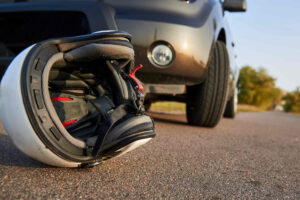
Here is the part that matters most. Helmet use does not decide who caused the crash. A driver who turns left across your path or rear-ends you is still responsible for that. Where helmet status can come in is on the size of the damages, through Florida's comparative negligence rules.
Can not wearing a helmet reduce your compensation?
It can, but not automatically. Florida uses modified comparative negligence, so your recovery drops by your share of fault. If the defense convinces a jury that going helmetless made your head injuries worse, your award for those injuries can be reduced. Since 2023, there is a harder edge: if your total share of fault passes 50%, you recover nothing.
Does the helmet defense actually hold up in Florida?
Often less easily than insurers suggest. Florida's leading case on this, Rex Utilities v. Gaddy, held that a defendant cannot use helmet nonuse against a rider without real proof that it caused or worsened the specific injury. In that case, the defense expert admitted he could not say whether a helmet would have changed the outcome, and the court refused to let the argument reach the jury.
That standard still guides these fights. The other side has to show, with medical and reconstruction evidence, that a helmet would have prevented or reduced these injuries. Speculation is not enough, and the argument only touches head and facial injuries, not the rest of your claim.
What if you were legally riding without a helmet?
Riding legally without one, meaning you were 21 or older with the right coverage, does not bar your claim. Insurers may still raise the helmet issue, so strong evidence about how the crash happened and what caused each injury does a lot of the work. This is also why collecting evidence after a serious accident is so important, especially because what you say early about your gear and the circumstances of the crash can affect your claim.
Why Motorcycle Claims Are Different From Car Claims in Florida
Motorcyclists sit outside Florida's no-fault system, which changes the whole picture.
Why don't motorcyclists get PIP benefits?
Florida's no-fault law applies to "motor vehicles," and motorcycles are not included. That means riders pay no PIP premiums, but also receive no automatic PIP after a crash. Without that cushion, a fault-based claim against the at-fault driver is usually the only path to covering medical bills and lost income. Some riders add medical payments coverage, though it is often modest.
What coverage matters most for riders?
Uninsured and underinsured motorist coverage tends to matter most. Florida does not require drivers to carry bodily injury liability, so a rider hit by an uninsured driver may have no one to collect from except their own UM policy. For many riders, that coverage is the difference between a real recovery and none.
What Should You Do After a Motorcycle Crash in Florida?
The first hour shapes a lot. If you are able, many riders find it helpful to:
- Call 911 and get a crash report started.
- Photograph the scene, both vehicles, road conditions, and your gear, including your helmet.
- Get checked by a doctor, since brain injuries can hide for a day or two.
- Keep answers factual and avoid volunteering opinions about fault or your helmet.
- Preserve the bike and gear before repairs or disposal.
- Talk with a lawyer before giving any recorded statement.
South Florida riders face their own hazards. Year-round riding weather means heavy traffic, and drivers who "did not see the motorcycle" cause a large share of left-turn crashes at busy intersections. For riders dealing with motorcycle crashes in West Palm Beach or motorcycle accidents in Port St. Lucie, local knowledge of these patterns can matter when reconstructing what happened.
Florida Motorcycle Helmet Questions, Answered
If I wasn't wearing a helmet, is it even worth calling a lawyer?
Usually yes. Helmet nonuse does not bar your claim, and it has no bearing on injuries to the rest of your body or on who caused the crash. The other side still has to prove a helmet would have changed your specific head injuries, which is not a given. An experienced Florida personal injury lawyer can help these arguments and protect your rights after a motorcycle accident while pursuing the full compensation you deserve.
Does my health insurance count as the $10,000 coverage?
It often can, if it provides medical benefits for motorcycle crash injuries. The safest move is to confirm the details with your carrier and keep documentation with you. Coverage can change at renewal, so it is worth a yearly check.
The adjuster keeps asking whether I had a helmet on. Do I have to answer?
Be careful here. These questions often aim to build a comparative-fault argument. You are not required to give a recorded statement, and it is reasonable to speak with a lawyer before answering questions about your gear.
Is lane splitting legal in Florida?
No. Florida law prohibits riding between lanes or between rows of traffic. Lane splitting in a crash can be used as evidence of comparative fault, which may reduce what a rider recovers.
Do novelty helmets meet Florida's legal requirement?
No. When a helmet is required, it must meet the federal FMVSS 218 standard. Novelty helmets do not qualify, which can matter both for a citation and for any later dispute over head injuries.
What is the most common cause of motorcycle crashes in South Florida?
Left-turn collisions lead the list. A driver turns across a rider's path, often claiming they never saw the motorcycle. Rear-end crashes, intersection violations, and distracted driving follow close behind.
Does it change things if I rode without a helmet and without the required insurance?
Yes. In that situation you were legally required to wear one, so going without is a statutory violation. That gives the defense a stronger comparative-fault argument, which makes experienced representation more important.
The Crash Wasn't Your Fault. Don't Let a Helmet Question Convince You Otherwise.

Adjusters know that many riders assume a bare head means a worthless claim. That is not how Florida law works. A driver who caused your crash owes you for that crash, and the burden sits on the other side to prove a helmet would have changed anything.
Rosenthal, Levy, Simon & Sosa has represented injured riders across Palm Beach County and the Treasure Coast for more than 40 years, in English and Spanish, from our West Palm Beach and Port St. Lucie offices. We work to reconstruct what really happened and to push back when an insurer leans on the helmet argument.
If a driver hit you, talk with a Florida motorcycle accident lawyer before you accept any version of events that puts the blame on you.
Reviewed by the motorcycle accident attorneys at Rosenthal, Levy, Simon & Sosa. This article is general information, not legal advice. Helmet and insurance rules can change, so confirm current requirements and speak with a licensed Florida attorney about your situation.
Schedule a Free Case Evaluation Today